In order to retain the client and give an understanding of how to scale and earn more with the same budget, you need to touch on 3 blocks in this topic: product, advertising, and website.
Product
In order for a brand to function for a long time and have LTV from each customer, it is necessary to understand at the start of a business or product that 1 product alone will not survive in the market, especially if this product is not unique.
To do this, you need to immediately develop a product that will have a line, or a store that was initially tested for 1 product must understand how to upgrade its product and how to use the full line in its marketing strategy. That is, the use of Cross-sale & Up-Sale and in general, so that users who have bought 1 quality product have a desire to buy more.
You can also use limited edition products, for example, for certain events, which also adds to the uniqueness of the product and the feeling that users can only buy it in this store.
Collaborations and partnerships
Many brands underestimate collaboration with other brands to attract a new audience, which can be a key point of brand distribution and target audience reach. Here are some practical examples:
Joint promotions with other brands (Coffee + Bakery)
Joint content and blogging (Athlete + Strap on Apple Watch brand)
Sponsorship of events and charity (Here the view of the brand itself may change)
Joint advertising campaigns (Strap on Apple Watch brand advertising through the face of an Athlete who gives a discount to his audience)
Here are some specific examples of brands that have used the strategy of collaborations and partnerships in the field of E-commerce:
Adidas and Kanye West (Yeezy): The collaboration between the Adidas brand and music artist Kanye West led to the creation of the Yeezy shoe line. This joint collection has become very popular and desirable among fashion fans.
Apple and Hermès: Apple collaborated with the French brand Hermès to create luxury accessories for the Apple Watch. This collaboration helped to expand the audience and give Apple Watch a higher status.
Target and Lilly Pulitzer: The retail chain Target collaborated with the famous women’s clothing brand Lilly Pulitzer to create a limited edition collection. This strategy helped Target attract new customers and boost sales.
Supreme and Louis Vuitton: Streetwear brand Supreme collaborated with luxury brand Louis Vuitton to create a joint collection of clothing and accessories. This joint collaboration was very popular among fashion connoisseurs.
Puma and Rihanna (Fenty): The Puma brand has collaborated with the popular singer Rihanna to create a line of footwear and clothing called Fenty. This joint collaboration helped Puma strengthen its position in the apparel and footwear market.
Nike and Off-White (The Ten): Nike has collaborated with Italian designer Virgil Abloh to create a footwear and apparel collection called “The Ten”. This collaboration has become a cult among fashion and sports fans.
Or even the latest movie Gran Tourismo, which shows how the game’s desperate collaboration with a car brand made a splash. That’s why you should always look at the bigger picture, not just launch 1 creative that showed good results for 1 month.
Social Proof
I think there’s nothing to say here, because nowadays brands that don’t love their users and don’t adapt the product to them immediately are dying.
People buy what someone already has or has tested, so the most important thing is good reviews, and this can only be done through some kind of service, which is no longer surprising, but it is the base of the bases.
Without customer retention and good reviews, the brand will simply not function anymore, because people believe people, and if there is no confirmation from people in advertising, there is no point in continuing.
Omnichannel
Omnichannel is a marketing and sales strategy in which a brand uses several different communication and distribution channels to reach its target audience. This includes the use of various online and offline channels such as online stores, social media, email, mobile apps, physical stores, phone lines, television advertising, and others.
Our main task as a professional media buyers is to convey that you need to use several traffic channels, in our case, the main channels are:
Facebook
Google
Tik-Tok
Email marketing
Organic traffic (SMM)
What is it for?
Expanding the audience, because different platforms have their own audience that will be interested in the product and thus get more sales while maintaining or diversifying the budget.
Increasing customer loyalty because they see the brand on different platforms.
Risk reduction, i.e. diversification. If you depend on 1 channel, it can be risky. If this channel experiences problems or competition increases, it can affect the business. Multichannel spreads the risk and provides more resilience.
Optimization of the advertising budget: Omnichanneling allows you to analyze and optimize the effectiveness of each channel and allocate your advertising budget based on the most productive ways to attract customers.
Examples
Having familiarized ourselves with what omnichannel is, let’s move on to practice.

Here we see how 4 traffic channels worked on one of our projects and we scaled it at the expense of other channels:
Facebook and Tik-Tok
Email marketing
Snapchat
Organic traffic from the clients Tik-Tok
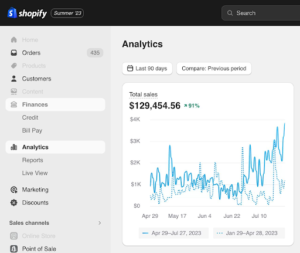
And, as you can see, many sales were at stage 2 and from another channel
That’s why you should use omnichanneling.
Retargeting + Email-Marketing
Similarly, in this case, we used Retarget with a unique offer that helped us pay off the funnel, although at the first stage, the purchase went beyond the KPIs.
Therefore, using retargeting with another product from the line or an offer makes it possible to return the customer and retain him.
Similarly, email marketing retains and returns customers well, which for its price can make a unique ROAS, as we use the base that has entrusted us with their email and work with it correctly:
Having a product line
Having and adapting offers for events or creating your own
Email marketing and retargeting can show incredible results using different communication methods with the audience.
Retention
Retaining every customer in E-commerce is now extremely important and has several key rationales:
Increase customer loyalty: Regular customers who buy from you regularly become more loyal to your brand. They are less likely to switch to competitors and are willing to spend more money.
Reduced marketing costs: Attracting new customers requires significant marketing and advertising costs. Retaining existing customers can be less costly because you already have their contact information and purchase history.
Increased average check: Loyal customers tend to make more purchases and spend more money on each order compared to new customers who are just getting to know your brand for the first time.
Spreading positive influence: Happy and satisfied customers become promoters of your brand by recommending it to their friends and family. They can become a source of new customers through word of mouth.
Minimize losses: Losing customers can affect sales and profits. Retaining existing customers helps prevent losses and maintain business stability.
Increased competitiveness: The economic environment in E-commerce is very competitive. Increasing the percentage of repeat purchases and customer retention helps your brand stay competitive.
Expanding your database: Data on loyal customers can be used to further personalize and improve marketing campaigns.
In the overall context of modern E-commerce, the importance of retaining every customer is to ensure stability, grow profits, and maintain your business’ competitive edge.
Customer retention is hard work, but it is an investment in the future success of your brand.
How exactly and with what?
Personalization:
Personalized content: Use data about a customer’s previous purchases and browsing habits to offer recommended products and promotions.
Personalized emails: Send personalized emails that reflect purchase history and recommend products that may be of interest.
Loyalty and rewards:
Loyalty program: Introduce a loyalty program where customers get bonuses or discounts for every purchase.
Bonuses for recommendations: Give customers bonuses or discounts for referring new customers.
Social media and communities:
Active presence in social media: Maintain an active social media account to interact with customers, answer questions, and provide relevant information.
Create a community: Create an online community or forum where customers can share experiences and get advice.
Customer service and support:
Effective customer service: Provide prompt and responsive customer support via live chat, phone, or email.
Returns and exchanges: Provide convenient conditions for the return and exchange of goods.
Promotions and special offers:
Exclusive offers: Offer customers exclusive discounts and promotions that are available only after they register on the site or subscribe to the newsletter.
Seasonal sales: Organize regular seasonal sales and discounts.
Provide convenience and security:
Have a fast and convenient ordering process: Try to make the purchase process as simple and fast as possible.
Payment security: Ensure a high level of security when making payments and keeping customers’ personal data safe.
Reviews and ratings:
Collecting reviews: Promote the collection of customer reviews and provide an opportunity to leave your opinion about products and service.
Display ratings: Allow customers to provide the feedback on your product.
Website
Wow, this isn’t an article, it’s a whole blog post, but I’m going to finish it anyway. So we flew to explore the site portion of the article.
In general, many of the projects that we’ve worked on are projects that couldn’t convey their value on the website. When promoting brands, many people do not pay attention to the landing page and the meanings that need to be conveyed on it.
And here’s what should be on the site to retain users:
A registration system and a personal account with unique offers, or perhaps an offer for registration.
Purchase history and Track Your Order, for tracking purchases, which gives the trust to return and understand where their orders are.
Bonus programs and loyalty system, where you can be involved in the brand or just accumulate some bonuses + referral system for friends.
24/7 chat support, which is 100% necessary for complex products and where you need to tell more.
Special promotions for regular customers.
Social proof, which should completely cover all the customer’s pains and give an understanding that he is back and I will return.
Summary
Why poor retention in e-commerce is death for a business?
In today’s ever-increasingly competitive e-commerce world, customer retention has become a key component of success. Lack of or poor customer retention can be disastrous for a business. Let’s take a look at why poor retention in e-commerce is the death of a business.
1. Loss of profit
When customers don’t return, a business loses not only current sales but also potential future revenues. Retaining customers is a benefit because they usually tend to make more purchases in the future and spend more money on each order.
2. Increased marketing costs
Attracting new customers requires significant marketing and advertising costs. When a business cannot retain its existing customers, it is forced to constantly reach out to new ones, which leads to higher marketing costs and lower profitability.
Every year, Facebook ads become more expensive and more and more businesses go online and fight for a place in the auction, so without a customer base and retention, a customer who thinks that Facebook is a magic button has already lost.
3. Loss of competitive advantage
Competitors also strive to attract customers to their products and services. If a business cannot retain its customers, other companies are ready to do so. A constant loss of customers leads to a loss of competitive advantage and a deterioration of market position.
4. Increase in the percentage of returns
Poor retention can lead to an increase in the number of product returns. When customers are not satisfied with the product or service, they tend to return goods, which again increases business costs and affects reputation.
5. Negative impact on reputation
Poor retention can lead to a negative impact on brand reputation. Dissatisfied customers may share their negative experiences on social media and review websites, which can scare away potential customers.
6. Loss of data and insights
Customers who make purchases and interact with a brand provide important data and insights. The loss of this data can lead to limited ability to analyze and optimize business processes.
In general, poor retention in e-commerce is death for a business due to loss of revenue, increased costs, loss of competitive advantage, increased return rates, negative impact on reputation, and loss of data and insights. Retaining customers and creating a retention strategy is an important task to ensure sustainability and success in e-commerce
And we used all these tactics on one of our clients to increase customer retention.
Thank you for your attention!
Leave a Reply